

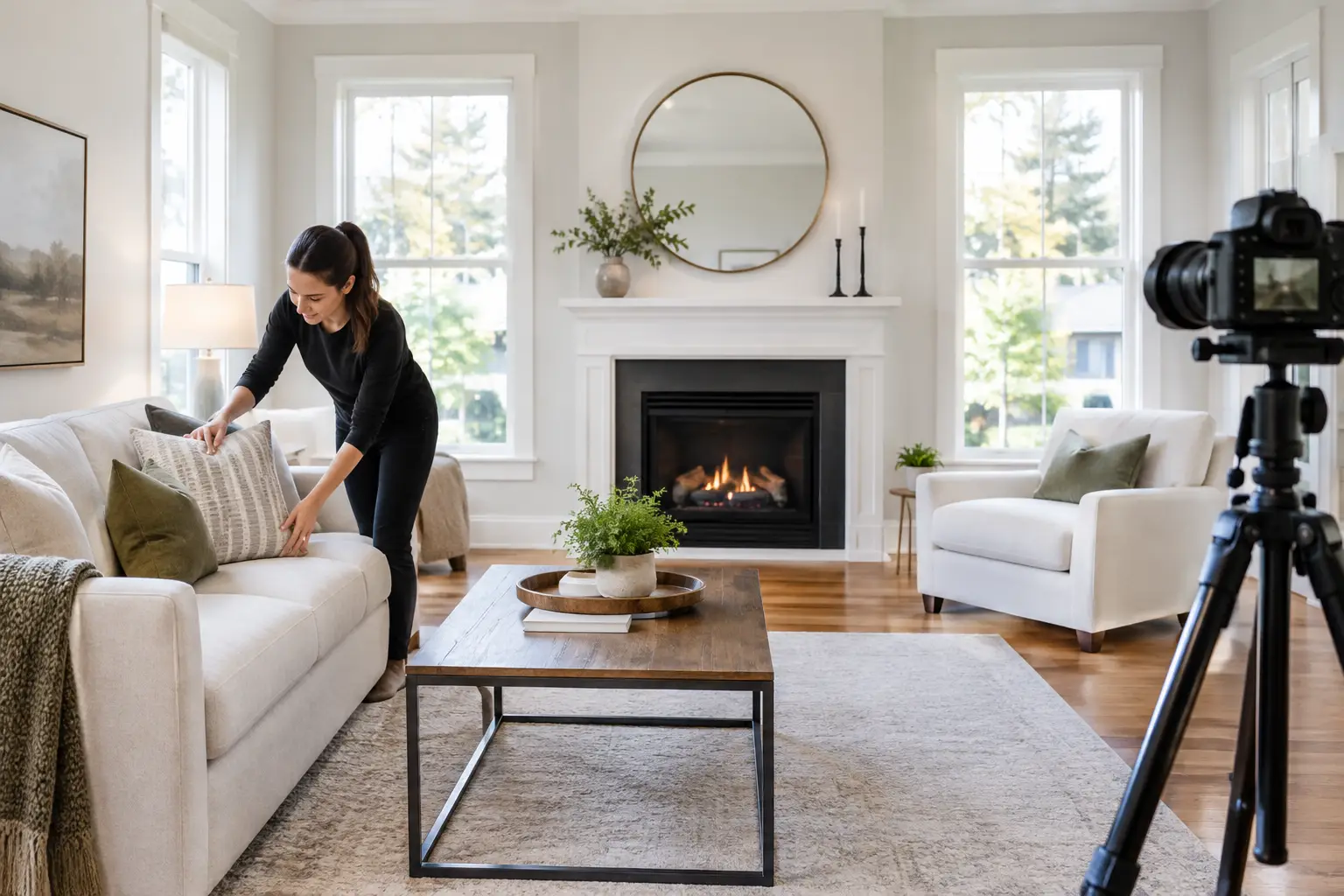
A strong listing photo does not make a home look different. It makes the home easier to understand at a glance. To prepare a Lexington home for photos, the goal is not to erase its personality or stage every room into a catalog set. The goal is to remove distractions so buyers can see the light, scale, condition, and lifestyle the property actually offers.
That distinction matters in Central Kentucky. A buyer comparing homes in Chevy Chase, Hamburg, Beaumont, Midway, or south Lexington may make an initial decision from photos before reading a single property detail. If the images suggest deferred maintenance, cramped rooms, poor storage, or unclear function, the listing can lose attention before the showing schedule begins.
Prepare a Lexington Home for Photos Before Cleaning Begins
Photography day should be the final step of preparation, not the first. Start by walking the property as if you were a buyer who has never been there. Enter through the front door, move through the main living areas, look out the windows, and notice what competes for attention.
This is where owners often misjudge the work. They focus on one imperfect wall or an older appliance while overlooking the things a camera magnifies: crowded counters, cords, faded bath mats, bulky furniture, pet items, mismatched storage bins, and rooms that do not clearly communicate their purpose.
Make decisions in this order: repair obvious defects, reduce excess furniture and belongings, clean thoroughly, then add restrained finishing touches. Styling cannot compensate for a damaged handrail, a dead exterior light, or a shower with visible mildew. Buyers may not know the repair cost, but they will form an opinion about care and likely maintenance.
For a home with significant condition questions, photographs should not be used to conceal them. A property that needs work may still photograph well when it is clean, orderly, and honestly positioned. The right approach depends on the price range, competing inventory, and whether the home is being marketed for move-in convenience, architectural character, land, income potential, or renovation value.
Start Outside: The First Photo Sets the Standard
The exterior image carries unusual weight because it is often the first image buyers see in search results. In Lexington, that image may need to contend with mature trees, deep front porches, changing weather, and shadows that fall quickly across brick or stone facades.
Mow, edge, and blow off hard surfaces a day or two before photography. Move trash and recycling bins, hoses, seasonal decor, spare planters, vehicles, and visible repair materials out of sight. Clean the front door, glass sidelights, mailbox, house numbers, and porch light. Replace burnt-out bulbs with matching warm-white bulbs rather than mixing color temperatures.
A front porch should feel usable, not crowded. One clean bench or a pair of appropriately scaled chairs can help establish function. Six containers, several flags, a welcome sign, and multiple pieces of outdoor furniture usually read as clutter in a photo.
For homes on larger lots, horse properties, acreage, or properties near the Gorge, exterior preparation has a different emphasis. Mow the immediate approach, clear visual clutter around barns and outbuildings, and decide which views matter most. A distant ridge, pond, pasture, mature tree line, or usable terrace may carry more buyer value than a close-up of a secondary structure. The image plan should reflect the reason a buyer would choose that property.
Make Each Room Read Clearly on Camera
A room should have one obvious purpose. The spare bedroom filled with boxes, exercise equipment, and a desk will photograph as storage, not as a bedroom or office. Choose the function most likely to support the listing strategy and remove the rest.
In living rooms, create clear walkways and pull furniture slightly away from walls when space allows. Edit down decorative objects, remote controls, blankets, pet beds, and visible cables. Keep enough furniture to show scale, but not so much that the room feels smaller than it is.
Dining rooms benefit from restraint. A simple centerpiece is generally enough. Large formal tables can make a room feel tight, so remove extra leaves, chairs, or side pieces if they crowd the composition. In homes where a dining room is being used as an office or playroom, consider restoring its intended function for photos when that is practical.
Bedrooms should be calm and legible. Make the bed with coordinated bedding, remove laundry baskets and charging cables, clear nightstands, and close under-bed storage drawers. Children’s rooms do not need to look vacant, but floors, shelves, and beds should be simplified. A buyer should see bedroom size before they see the toy collection.
Kitchens and Baths Need a Higher Standard
Kitchens and baths influence perceived condition more than nearly any other rooms. They also reveal clutter immediately.
Clear kitchen counters almost completely. A coffee maker or one attractive functional item is usually sufficient. Remove magnets and papers from the refrigerator, clean appliance fronts, empty the dish rack, and put away soap bottles, scrubbers, and paper towels. If the kitchen has a strong feature, such as a range, island, pantry, original cabinetry, or view to the yard, make sure it is visible rather than blocked by daily life.
Bathrooms should be cleaned to hotel-room standards. Remove medicine, toothbrushes, razors, scales, toilet brushes, used bars of soap, and personal products. Hang fresh, neutral towels and close the toilet lid. Check caulk, grout, mirrors, exhaust vents, and light fixtures. A modest bath can still present well when it looks clean and maintained; an expensive bath can feel neglected if those details are ignored.
Use Light Intentionally, Not Excessively
Lexington’s soft green landscape and shifting Kentucky light can be beautiful in listing photos, but timing matters. The photographer will manage technical exposure. The owner’s job is to make light accessible.
Open blinds and curtains where the view or natural light adds value. Clean windows inside and out when possible. Remove heavy window treatments that block a good view, but do not strip a room of useful privacy if neighboring homes are close. Sheers may soften direct sun and preserve a finished look.
Turn on interior lights only if requested by the photographer or listing team. Too many lamps can introduce uneven color and visual noise. What matters is consistency: matching bulbs, clean fixtures, and no dead lamps. Daylight bulbs and warm incandescent-style bulbs in the same room can make walls look different colors in photos.
Do Not Let Small Repairs Become a Larger Signal
Photos are not an inspection, but they are an early trust test. Buyers notice peeling paint at the front entry, stained ceiling areas, damaged screens, loose cabinet pulls, missing outlet covers, and cracked switch plates. They may reasonably wonder what else has been deferred.
Not every issue needs to be corrected before listing. If a home is being sold in as-is condition or priced for renovation, spending heavily on cosmetic work may not produce a return. But low-cost, high-visibility repairs usually deserve attention because they reduce friction in the buyer’s first impression.
Be cautious about partial projects. An unfinished backsplash, open wall repair, paint samples on multiple walls, or construction materials in the garage can make a home feel less settled than it is. Either complete the work properly or remove the evidence of an abandoned project before photos.
Plan for Pets, People, and the Day of the Shoot
Photography day works best when the home is quiet. Pets, children, contractors, and sellers moving from room to room make it harder to capture clean compositions. Arrange to be out of the home if possible, taking pets with you or securing them safely off-site. Do not leave pet crates, food bowls, litter boxes, or pet gates visible unless there is no reasonable alternative.
Before leaving, make one final pass through the property. Turn off ceiling fans, close toilet lids, hide trash cans, straighten rugs, remove vehicles from the driveway, and put away valuables, medications, firearms, sensitive documents, and family photos if privacy is a concern. Open the blinds you want open, then let the photographer work through the home without interruption.
Match the Preparation to the Listing Strategy
A $300,000 starter home, a historic downtown property, a horse farm, and a luxury estate should not receive the same preparation plan. The underlying standard is the same – clean, functional, well maintained, and easy to read – but the emphasis changes.
For a first-time buyer audience, storage, usable bedrooms, updated systems, and move-in readiness may matter most. For a historic home, the goal may be to show original millwork, proportions, fireplaces, and material integrity without letting dated decor overpower the architecture. For an investment property, buyers may care more about unit layout, access, parking, mechanical condition, and income-supporting features than decorative styling.
The photos should support the value argument in writing. If the price reflects a renovated kitchen, walkable location, usable acreage, or unusually strong outdoor living, those elements need to be visible and properly presented. Good marketing is sourced, dated, and interpreted. Good photography is part of that evidence.
The final question is simple: if a serious buyer saw only these images tonight, would they understand why this home deserves a showing? If the answer is almost, spend another hour preparing. That hour is usually cheaper than the attention lost in the first week on market.
Leave a Reply