

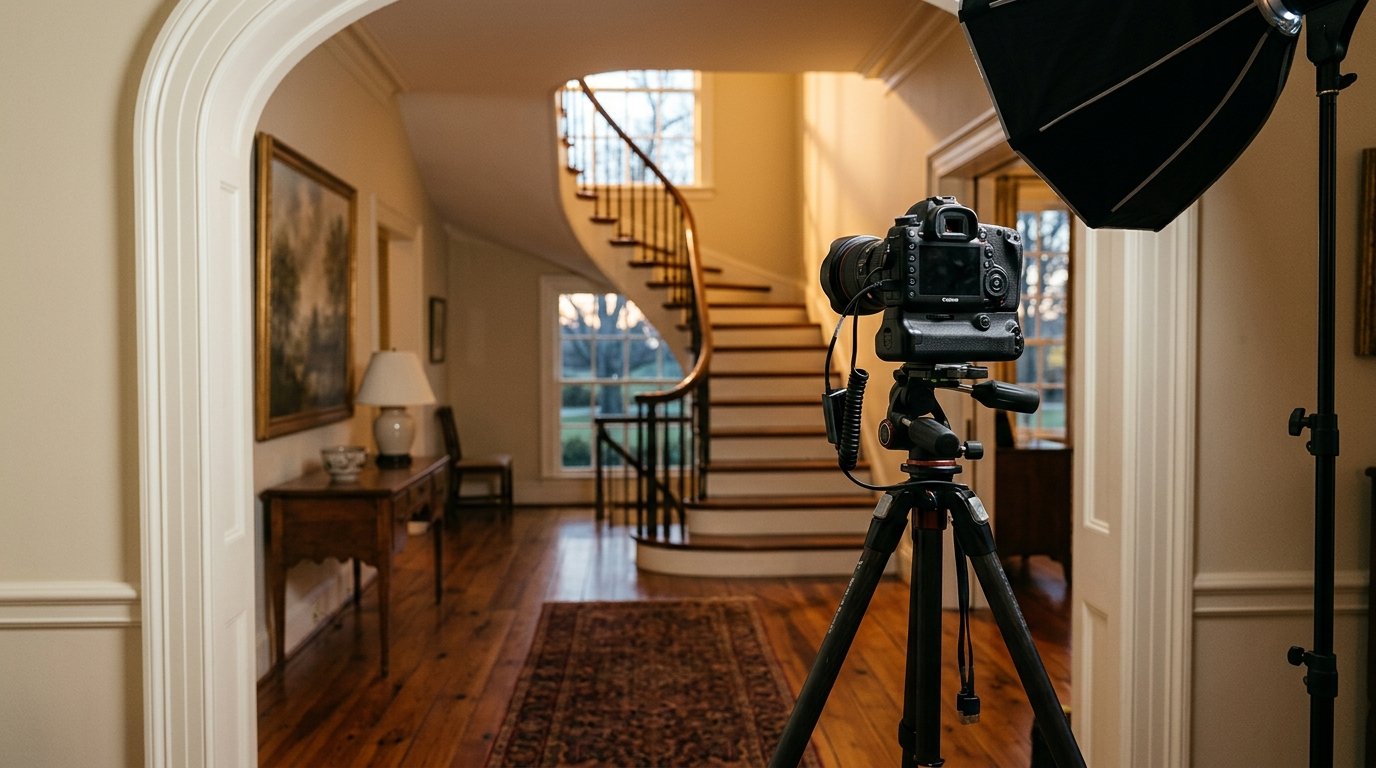
Property Presentation Standards
Buyers meet your house on a screen first. That meeting is winnable.
Presentation is how a listing competes before anyone visits: photography shot deliberately, film where the property earns it, and feature sheets that state facts buyers actually weigh. The bar I use is the listing-page test — on a screen full of thumbnails, in the first seconds, does this property stop the scroll and answer why it matters? Every listing I take must pass before it launches.
The listing-page test
Nearly every buyer meets a property the same way now: as one thumbnail among dozens on a portal page, judged in seconds. That is the actual arena, so it is the standard I hold: pulled up cold on a phone next to its true competition, does the listing stop the scroll, and do the first five images tell the property’s story in order? If not, the listing is not ready, whatever the calendar says. This is honored mostly in the breach — any Kentucky portal page shows dark rooms, crooked verticals, and phone photos from a cloudy Tuesday. The gap between that and deliberate presentation is free market share, claimed by doing the work properly.
Buyers meet your house on a screen first. That meeting is winnable.
Photography — deliberate, not just professional
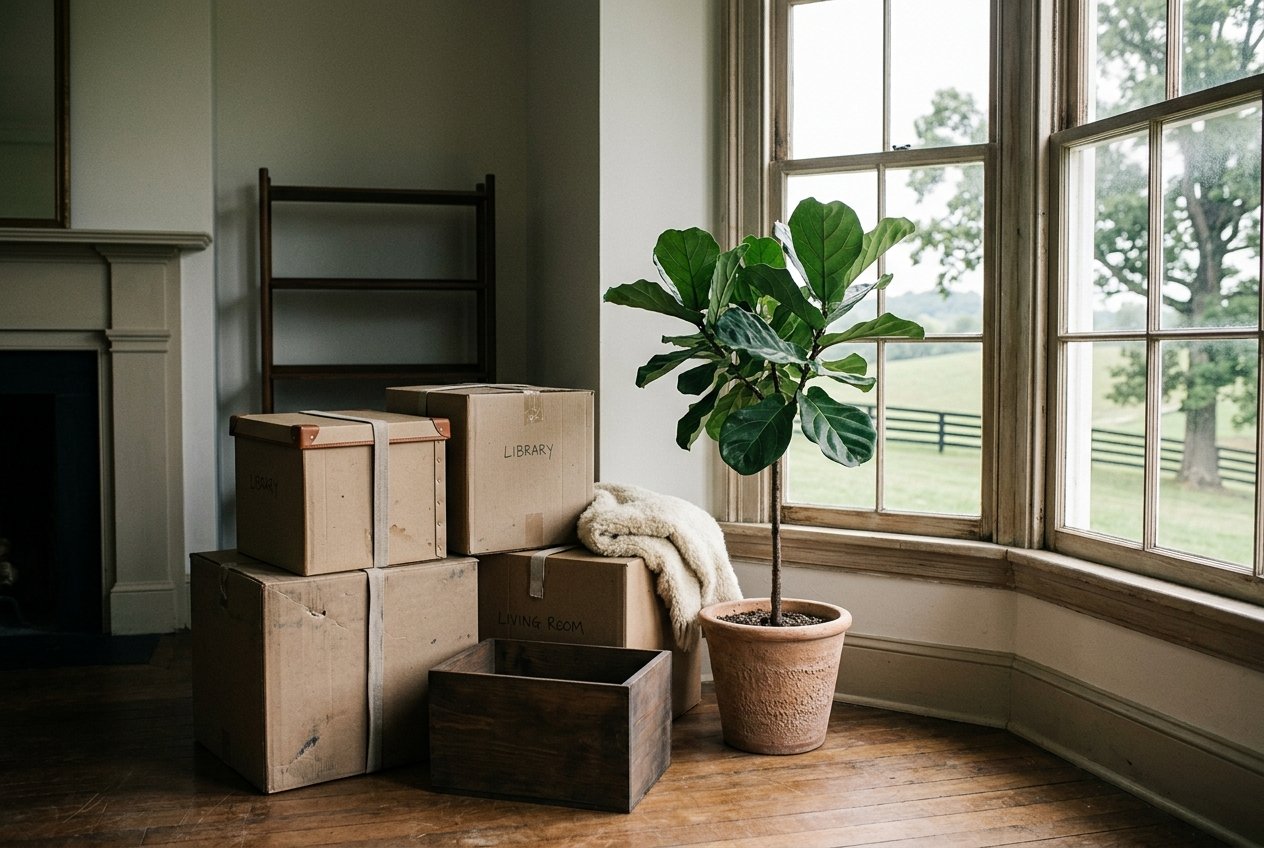
“Professional photos” is table stakes; deliberate photography is the standard. Shot order that leads with the property’s single best argument — the ridgeline view, the entry hall, the land — because the first image decides whether a buyer opens the second. Light chosen, not accepted: right time of day for the orientation, dusk exteriors where glow serves the house. Compositions that answer buyer questions — how rooms connect, what the lot actually is — rather than inflating with distortion. Honest rendering, because photography that overpromises produces showings that underdeliver and offers that never come. And the house itself made camera-ready first, per the floor set in home staging — no photographer outshoots clutter.
Film and motion — where they earn their place
Video is a tool with a threshold, not a default. Walkthrough film earns its cost where the property’s argument is spatial or scenic — flow between rooms, land unrolling past a fence line, a Gorge view opening off a deck — and aerial work earns its place on acreage, farms, and properties whose siting is the story. The underused format is the honest short reel: thirty seconds of the property’s best truth, built for the feeds where buyers linger, feeding the channel strategy in my marketing plan. What I decline is film for film’s sake — a slow pan through an ordinary hallway with stock music adds cost, not persuasion. The property’s character decides the toolkit.
Feature sheets and the written layer
After the images hook, the words carry weight — and most listing copy wastes its turn on adjectives. The written standard: lead with the facts a buyer weighs — what was updated and when, what the systems are, what the acreage and outbuildings actually are, what conveys — because specificity is credibility. In print and at showings, a proper feature sheet does the same work: accurate details, dimensions, improvements with dates, utilities, and for rural property the diligence facts — water source, septic, access, internet — that this corridor’s buyers ask first. Claims stay verifiable and property-focused; anything volatile points to dated data, consistent with the discipline behind the market report.
One standard, scaled to the property
Presentation scales in cost but not in care. A modest Richmond ranch and a Keeneland-corridor estate get different budgets — the estate may justify cinema-grade film, twilight sessions, and the printed collateral described in luxury home marketing — but both get correct light, deliberate sequencing, honest copy, and the listing-page test before launch, because the buyer deciding in four seconds does not grade on a curve. This standard is one component of the full launch system — pricing, preparation, channels, and negotiation — laid out in my marketing plan and the Kentucky home selling process. Sellers are welcome to hold me to it: pull up my active listings and apply the test yourself.
Common Questions
Do professional photos really change what a house sells for?
What they demonstrably change is attention — more views, more saved listings, more showings — and attention is the raw material of competing offers. I will not claim a precise price premium, because presentation works jointly with pricing and condition and no honest number isolates it. What I can say from running listings: poor photography measurably suppresses traffic, and traffic you never got is negotiating leverage you never had.
Does every listing need video and drone work?
No — and paying for unneeded production is money that should have gone elsewhere. Film earns its place when the property’s story is spatial or scenic: land, views, flow, siting. Aerial work is close to essential on acreage and farms, and largely decorative on an interior-lot ranch. I match the toolkit to the property’s actual argument and will tell you plainly which tier yours warrants.
What is the listing-page test, exactly?
Open the portal page where your home will appear, as a buyer would — a phone screen of thumbnails, yours among its true competition. In the first seconds: does your image stop the scroll? Do the first five photos, in order, make the property’s case? Does the copy lead with facts a buyer weighs? If any answer is no, the listing launches unready — so we fix it before launch, not after.
Presentation is one arm of the full marketing plan — see the top-tier version in luxury home marketing.
Marcos Gil, REALTOR® · Keller Williams Commonwealth · Based in Beattyville, serving Lexington to the Red River Gorge · Also owner of Central Property Services and publisher of Invest in the Gorge — any recommendation involving my other businesses is disclosed in writing.
See the marketing standard
Last updated: August 19, 2026