

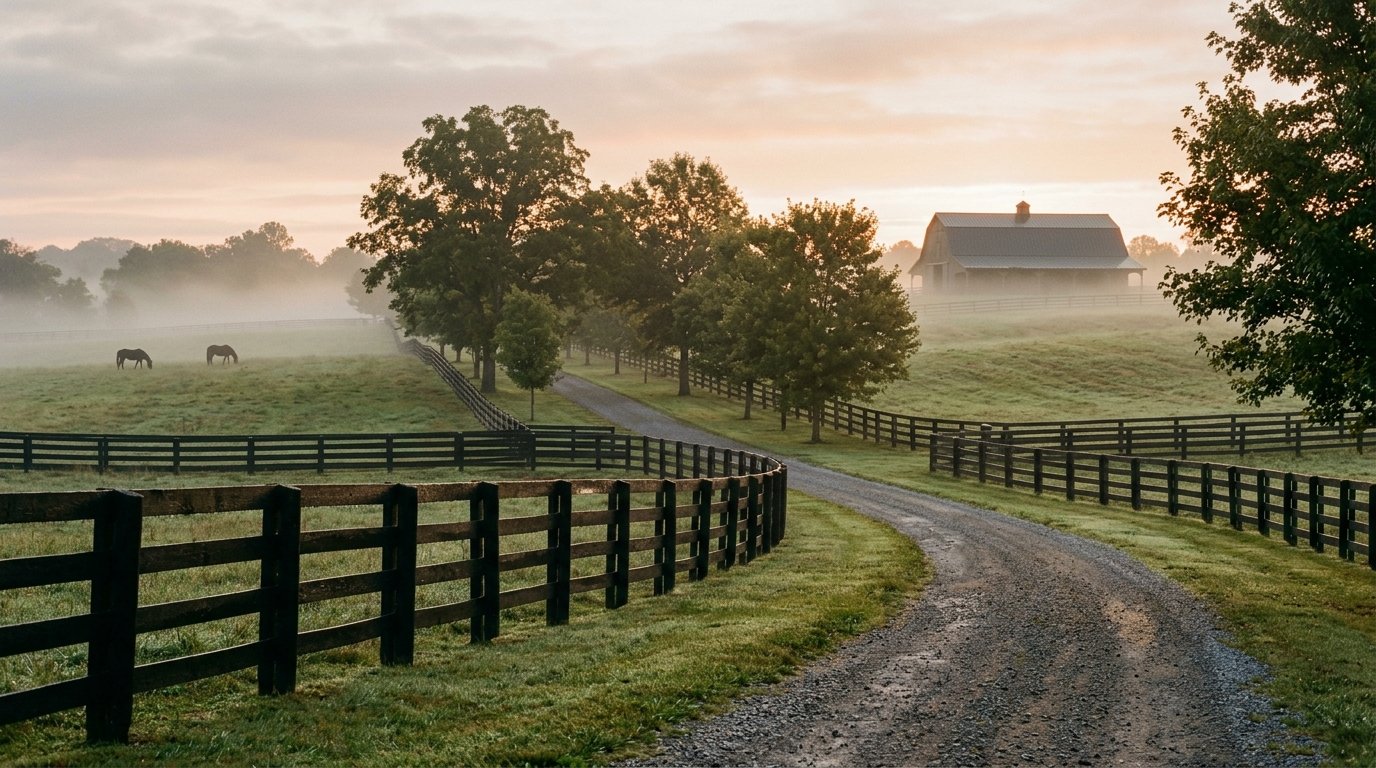
Relocating to Kentucky With Horses
Moving to Kentucky with horses means you are not moving to horse country — you are moving horses, to horse country. Different checklist.
Most horse owners relocating to Central Kentucky do it in two moves: horses into a boarding barn first, then onto their own farm once the right property closes. Buying the farm before arriving compresses everything — pasture, fencing, water, and barn diligence done long-distance — and it can work with the right support. Either way, the horses’ logistics deserve their own timeline: hauling arrangements, health paperwork, and a vet and farrier lined up before the trailer rolls. Whoever helps you find the farm, their Kentucky license standing is verifiable through the Kentucky Real Estate Commission.
Boarding First or Farm First
The two-move plan — board the horses, buy the farm second — trades some months of board bills for enormous slack: you shop farms without a deadline, see pastures through a season, and your horses are cared for while you close. The one-move plan — farm under contract before you arrive — suits owners with clear requirements and trusted local eyes doing diligence. Most relocations I work end up two-move by choice once the owners price the pressure of farm-shopping against a hauling date.
You are not moving to horse country. You are moving horses, to horse country. Different checklist.

What Farm Diligence Actually Covers
A horse farm inspection is a property inspection plus an agricultural one. Pasture: acreage per horse you intend, forage condition, and what the seller sprayed or seeded. Fencing: type, condition, and the corners where wire lurks under board. Water: automatic waterers, hydrant runs, creek access and its wet-weather behavior. Barn: stall count and size, ventilation, hay storage, and electrical condition — aging barn wiring deserves a professional look. Add manure management, trailer turnaround room, and how the driveway handles a rig. The horse farm guide goes deeper on the market itself.
The Search Map
The classic horse-country ring runs through Woodford, Bourbon, Scott, and Jessamine counties — the Versailles and Midway corridor is its postcard center — with Madison and Clark counties offering more land per dollar a little further out. Discipline shapes geography too: proximity to the Kentucky Horse Park matters for some competitors, hauling access to interstates for others, and a short drive to a good equine hospital reassures everyone. Name your non-negotiables early and the map narrows fast.
Moving Day Logistics
The hauling plan deserves the same rigor as the mortgage. Long hauls mean planned rest stops or a professional equine transporter; interstate movement requires current health paperwork from your veterinarian — coggins and certificates arranged in the weeks before, not the day before. On the receiving end: stalls bedded, water checked, hay from a consistent source ready, and a settling-in period before turnout on unfamiliar pasture. Build the horses’ arrival week as deliberately as your own.
Building the Kentucky Network
The good news about relocating horses to this region: the professional bench is deep — equine veterinary practices among the best anywhere, farriers, hay suppliers, and every discipline’s trainers. The task is choosing, not finding. Ask your current vet for Kentucky referrals, join the local discipline community before you arrive, and have a vet relationship established before you need one at two in the morning. I connect relocating clients to that network as part of the search — it is half the value of a local agent in this niche.
Common Questions
How far ahead should I start the farm search?
For a farm-first move, begin looking six months or more before your target arrival — inventory in the classic horse counties is limited and specific requirements shrink it further. Boarding-first relocations can compress that, since the horses’ housing no longer depends on your closing date.
What does horse boarding cost near Lexington?
Rates span a wide range with services, facility quality, and county — and they change enough that a printed number would mislead. Budget realistically for full board during a transition and ask me for current local rates when we plan; I keep a working list of barns taking newcomers.
Do I need a special loan for a horse farm?
Possibly — larger acreage and agricultural improvements can move a purchase from conventional programs toward farm-credit lenders, and the split varies by property. This is education, not lending advice: engage a licensed lender who knows farm properties early, ideally before you tour.
Continue to horse farms & equestrian property or the land and farms guide.
Marcos Gil, REALTOR® · Keller Williams Commonwealth · Based in Beattyville, serving Lexington to the Red River Gorge · Also owner of Central Property Services and publisher of Invest in the Gorge — any recommendation involving my other businesses is disclosed in writing.
Plan the Farm Search
Last updated: August 19, 2026