Red River Gorge Life
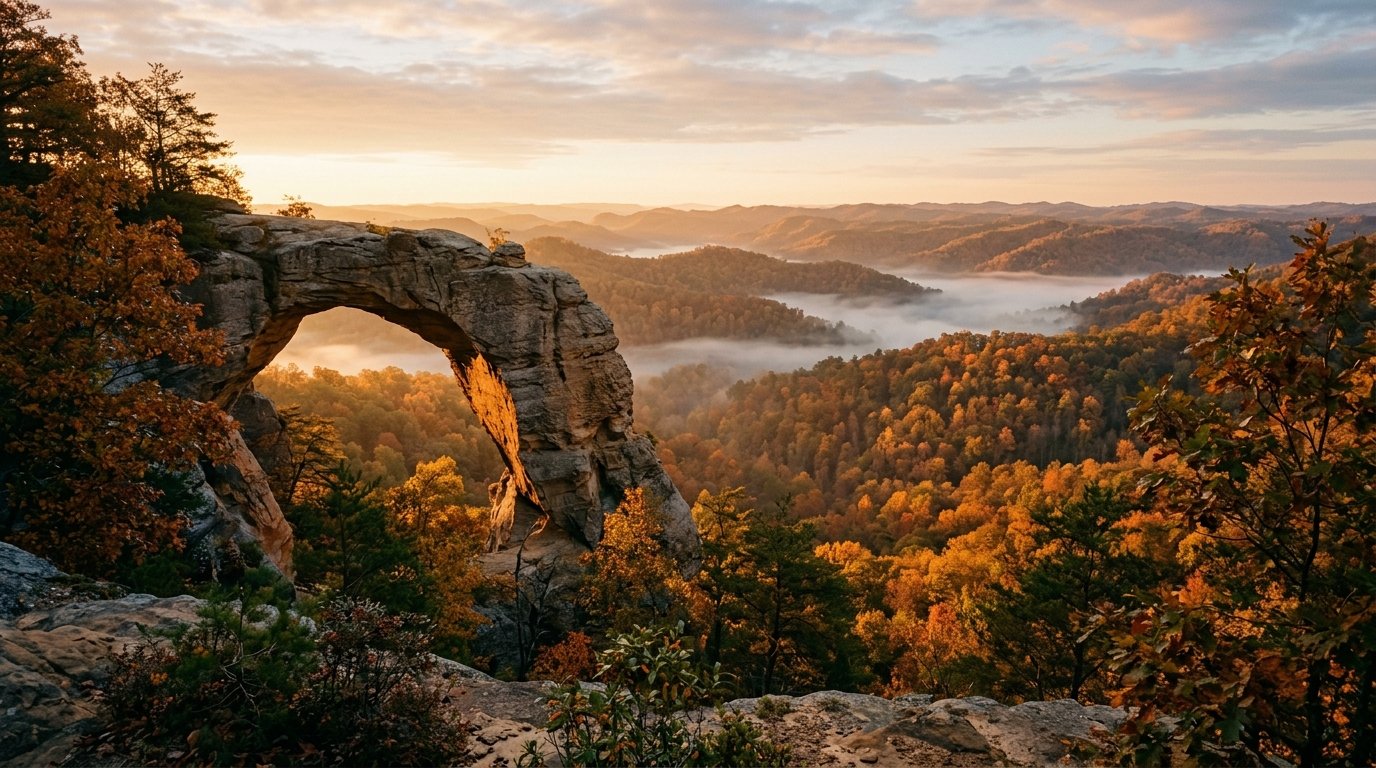
Red River Gorge life is arch country, cliff light, and a cabin that keeps its own calendar.
The Red River Gorge is a national-caliber landscape — sandstone arches, cliff lines, and Daniel Boone National Forest — that draws climbers and hikers from around the world to a corner of eastern Kentucky. Owning here means living with that draw: quiet winter weeks, thrumming October weekends, and a stewardship ethic the community takes seriously. Cabin ownership rewards people who love the place first and treat any rental income as the second reason, not the first. And any Kentucky agent’s license standing is public through the Kentucky Real Estate Commission.
Why the world shows up here
The Gorge is one of those rare places whose reputation runs far ahead of its region. Its sandstone cliff lines rank among the most celebrated sport-climbing destinations anywhere, drawing climbers from across the globe; its concentration of natural arches, trail mileage through Daniel Boone National Forest, and landmarks like Natural Bridge pull hikers and photographers in every season. The culture that formed around this — trailhead lots with plates from a dozen states, the legendary climber gathering spot that is Miguel’s Pizza — gives a remote-feeling landscape an unlikely international hum.
Arch country, cliff light, and a cabin that keeps its own calendar.
The owner’s year
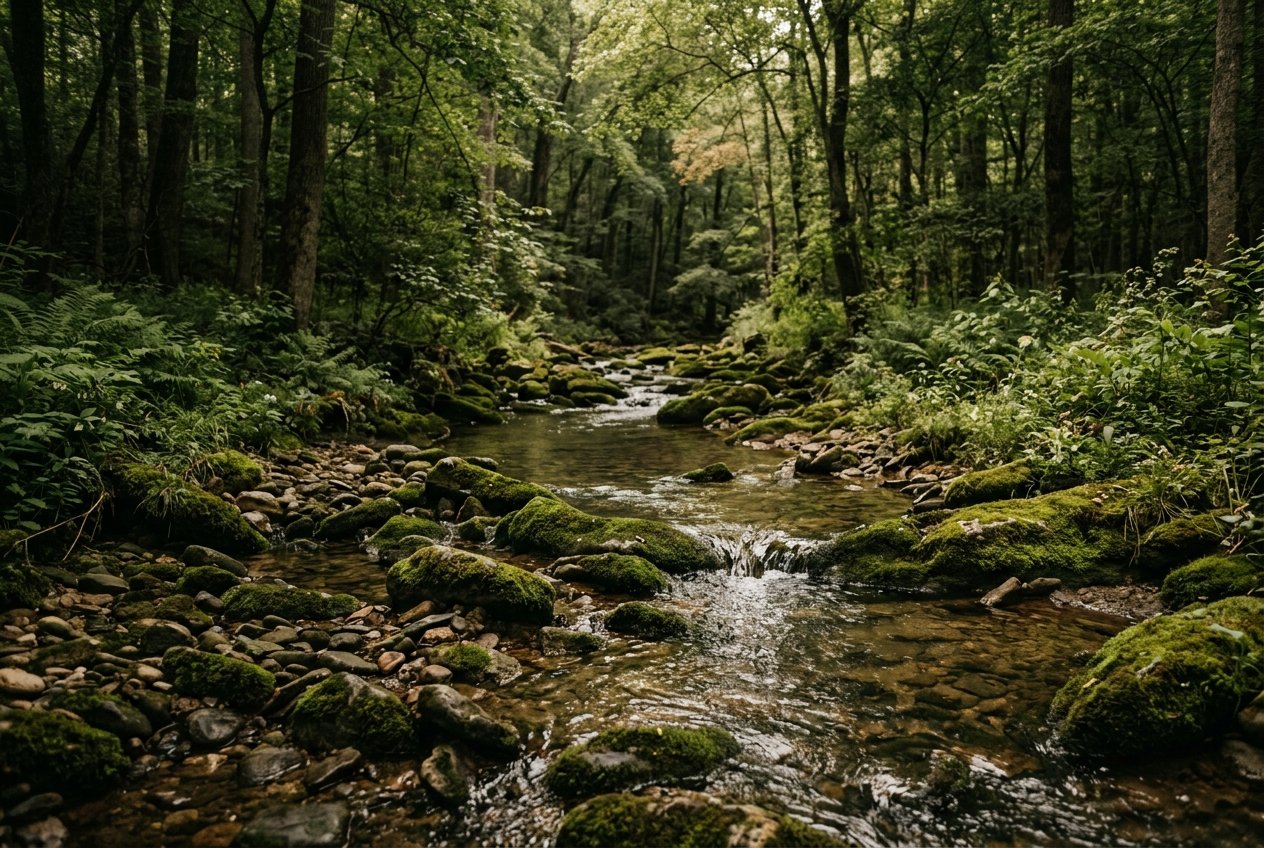
A Gorge owner’s calendar has seasons within seasons. October is the crescendo — peak color, peak crowds, cabins full and roads slow. Spring runs a long green build from redbud to full canopy, with waterfalls at their best. Summer belongs to swimming holes, long evenings, and cicada sound. And winter is the secret: bare-branch views that summer hides, ice on the cliff lines, and weeks of near-solitude when the landscape feels privately yours. Owners who love the place tend to guard those off-peak weeks for themselves and let the busy season pay the bills.
Cabin life, honestly described
Cabin ownership here is a rhythm, not a postcard: gravel-road maintenance, wells and septic systems, humidity management, firewood logistics, and the reality that services are further away than city owners expect. None of this is a complaint — it is the texture of the thing — but it rewards owners who visit often enough to stay ahead of the punch list or who budget properly for caretaking. If short-term rental income is part of your plan, the operational and regulatory picture is its own subject, covered without romance in the cabin and STR investment guide.
The stewardship ethic
The Gorge’s beauty survives on behavior. Much of the land is national forest held in public trust, climbing access on private land exists because of years of patient work by the climbing community and cooperative landowners, and the fragile cliff-line ecology does not forgive carelessness. Owners inherit a share of that responsibility: leave-no-trace habits, respect for access agreements, fire discipline in dry seasons, and dark-sky courtesy at night. The reward for taking it seriously is belonging to a community that genuinely tends the place — and the durable value of a landscape that stays worth visiting.
Where I stand, disclosed
Two disclosures belong on this page. I publish investinthegorge.com, a site covering Gorge ownership and the cabin market — so when I write about this area, I am both an agent who transacts here and a publisher who covers it, and you should weigh my enthusiasm accordingly. I also own Central Property Services, a repair company, which occasionally serves properties in this region; any recommendation of its services comes with that interest stated. If you want a purely disinterested read on the Gorge, seek other sources too — I will happily point you to some.
Common Questions
Is a Gorge cabin a good investment?
The honest answer: buy it first because you want the place. Short-term rental performance varies with seasonality, regulation, and operating discipline, and I do not print return projections — anyone who guarantees numbers is selling something. What I can offer is current, dated market data on request and a sober walk through the operating realities.
How crowded does it actually get?
October weekends and holiday stretches bring real crowds — full trailheads, slow roads, booked cabins. The counterweight is everything else: winter weeks of near-solitude, spring and summer weekdays that feel private. Owners learn the rhythm quickly and plan their own use around the peaks they rent out.
What should I know before buying a cabin here?
Access and infrastructure first: how the road is maintained and by whom, water source, septic condition, internet options, and insurance for the setting. Then use rules — county rules and any private covenants govern short-term rental legality, and verifying them precedes any offer. None of this is exotic, but skipping it is how romance becomes regret.
Go deeper on the ownership math in the cabin and STR guide or browse what Gorge properties look like in vacation homes in the Red River Gorge.
Marcos Gil, REALTOR® · Keller Williams Commonwealth · Based in Beattyville, serving Lexington to the Red River Gorge · Also owner of Central Property Services and publisher of Invest in the Gorge — any recommendation involving my other businesses is disclosed in writing.
Talk through Gorge ownership
Last updated: August 19, 2026