

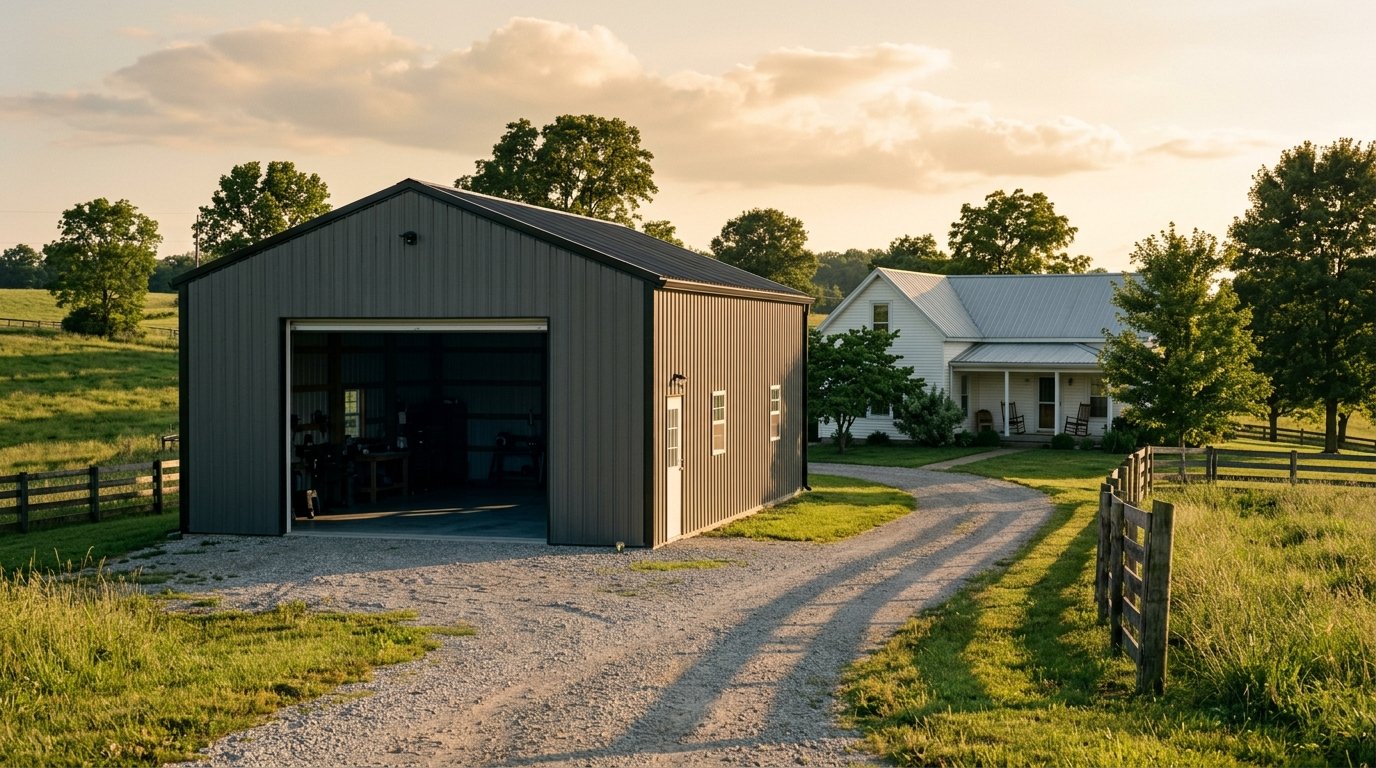
Homes with Workshops & Big Garages in Central Kentucky
The shop is the point. Here’s how to buy a good one.
Workshop and oversized-garage properties are among Central Kentucky’s most genuinely demanded features — tradespeople, mechanics, woodworkers, and equipment owners all need real shop space, and the region’s rural parcels often deliver it. The diligence lives in specifics: electrical service and amperage, slab condition and thickness, door height and width, and whether a truck or trailer can actually reach the building. Verify those at the property, because listings routinely overstate them.
The corridor’s honest demand for shop space
This is not a niche preference here. Central Kentucky’s economy runs on trades — construction, mechanical work, farm services — and its culture runs on making and fixing things. Contractors need to park trucks and store material off the clock; hobbyists restore cars and build furniture; horse and farm owners keep equipment that must live under a roof. Rural Madison, Clark, Estill, and Lee County parcels frequently include pole barns and shops, and in-town listings with true oversized garages move on that feature alone. When I list a property with a good shop, I market the shop like the asset it is.
The shop is the point. Here’s how to buy a good one.
Power: the first question, always
A shop without adequate electricity is a shed with ambition. Ask what service the building actually has: its amperage, whether it runs on a subpanel from the house, and — for welders, compressors, and serious machinery — whether three-phase power is present or even available on that road, which in rural Kentucky it often isn’t. Extending or upgrading service can cost real money and deserves a quote during diligence, not after closing. I’ve seen buyers fall for square footage and inherit an extension cord. Verify the panel with your inspector.
Slab, doors, and the geometry of use
The floor and the openings decide what the building can do. A thin or cracked slab limits lifts and heavy equipment; an honest shop has substantial, sound concrete. Door height determines whether a dually, an RV, a boat on a trailer, or a tractor with a cab actually fits — measure, because “tall door” means nothing. Interior clear height governs car lifts. Then walk the approach: can a truck and trailer swing in from the road, and does the drive surface survive weather? Ten minutes with a tape measure prevents years of quiet disappointment.
Outbuildings age differently than houses
Inspect the shop as a structure, not an accessory: roof condition (metal roofs last long but rust and fastener issues are real), evidence of slab moisture or frost movement, rot at the base of poles on pole-frame buildings, and the state of any wood stove or heater, which insurers ask about. Insurance in general deserves a call — some carriers rate large outbuildings and shop uses specifically, a topic touched in my Kentucky insurance guide. And if the shop hosted a business, ask what was stored or dumped there; it’s your soil now.
Where to search, and how I help
True shop properties concentrate on rural land and farm listings and the edges of towns like Richmond, Berea, and Stanton–Clay City, where parcels are large enough for outbuildings. In-town options exist but sell quickly to exactly this buyer. Tell me your actual use — welding, restoration, farm equipment, business storage — through the dream home finder, and I’ll filter for the specifications that use requires rather than the photos that merely suggest them. Zoning matters too if any commercial activity is planned; we confirm it before you offer.
Common Questions
Can I run a business out of a residential shop building?
Sometimes, within limits — home-occupation rules, zoning, and even road access restrictions vary by jurisdiction, and neighbors and covenants can constrain what’s allowed on paper-eligible land. If business use matters, we verify zoning and any deed restrictions during diligence and, where needed, talk to the planning office directly. Assume nothing from the presence of a big building.
What electrical service does a serious workshop need?
It depends on the tools: general woodworking and storage live happily on a robust residential subpanel, while welders, large compressors, and machine tools raise questions of amperage and sometimes three-phase power, which many rural roads don’t offer. Have an electrician or inspector verify the existing service against your intended use, and price any upgrade before closing — not after.
Do workshops add resale value?
In this region, a genuinely good shop attracts a real and motivated buyer pool — trades and equipment owners search for exactly this. But value depends on the building’s specifications and condition, not its footprint alone, and appraisal credit for outbuildings varies. For current dated data on how shop properties trade, ask me directly.
Shop buyers often shop land too — see land and farms and the construction and land financing guide if you’d rather build the shop yourself.
Marcos Gil, REALTOR® · Keller Williams Commonwealth · Based in Beattyville, serving Lexington to the Red River Gorge · Also owner of Central Property Services and publisher of Invest in the Gorge — any recommendation involving my other businesses is disclosed in writing.
Find shop properties
Last updated: August 19, 2026