

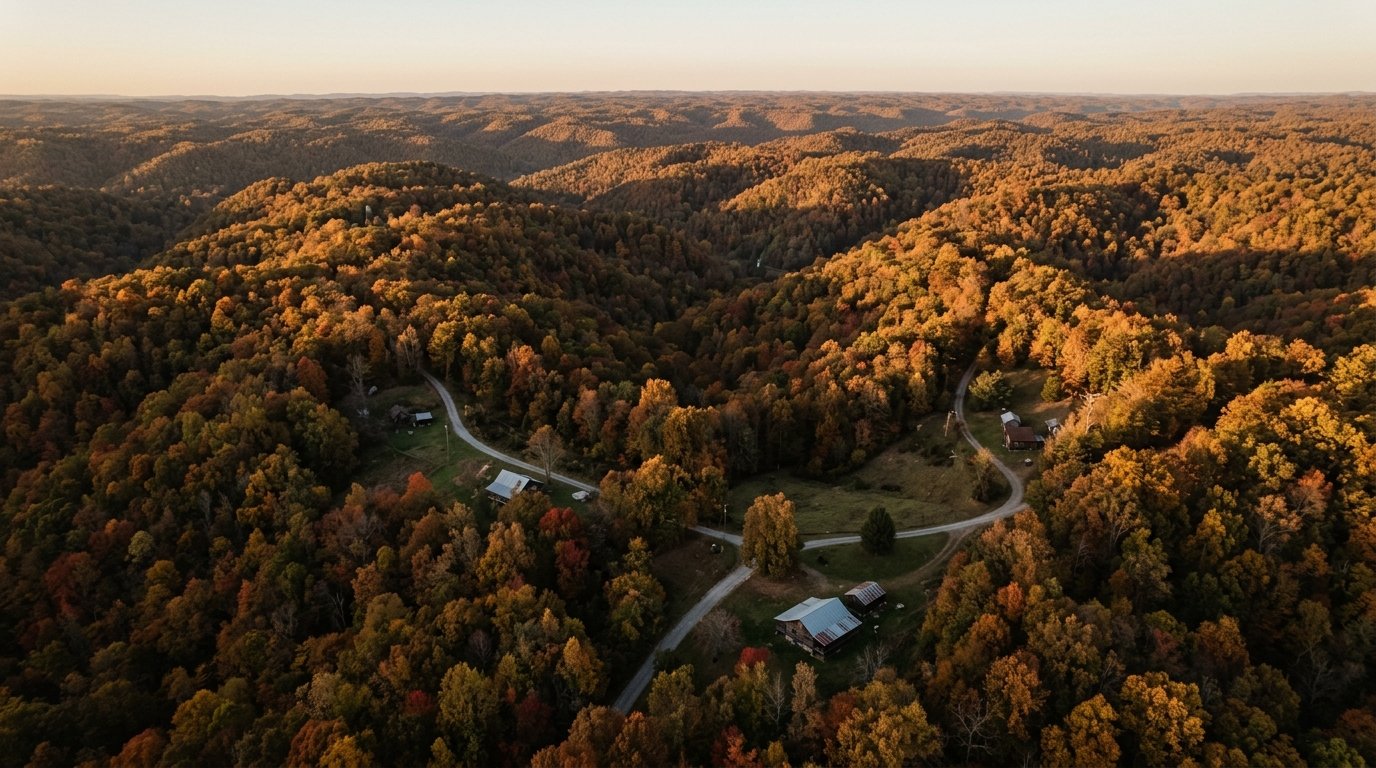
Wolfe County, KY Real Estate
Wolfe County, KY real estate is a land-and-cabin market where diligence, not square footage, sets the value.
Wolfe County’s market is cabins and land, not subdivisions: wooded acreage, modest rural homes, and a growing cabin segment tied to Red River Gorge tourism along the county’s northern edge. Inventory is thin and irregular, comparable sales are scarce, and value depends heavily on access, water, and position relative to the Gorge. It rewards patient buyers who do county-level diligence — and punishes those who skip it. You can verify any Kentucky agent’s license standing through the Kentucky Real Estate Commission.
What this market is, and what it is not
Wolfe County real estate divides into three rough categories: raw wooded land, established rural homes on acreage, and the cabin stock — from decades-old hunting camps to new builds aimed at Gorge visitors. What you will not find is production housing; there is no meaningful subdivision inventory, and listings arrive irregularly rather than in a steady stream. That shapes strategy: serious buyers watch the market over months, move decisively when the right parcel surfaces, and lean on someone who hears about ground before it lists. The Campton and Wolfe County community guide covers the living side; this page is about the market itself.
A land-and-cabin market where diligence, not square footage, sets the value.
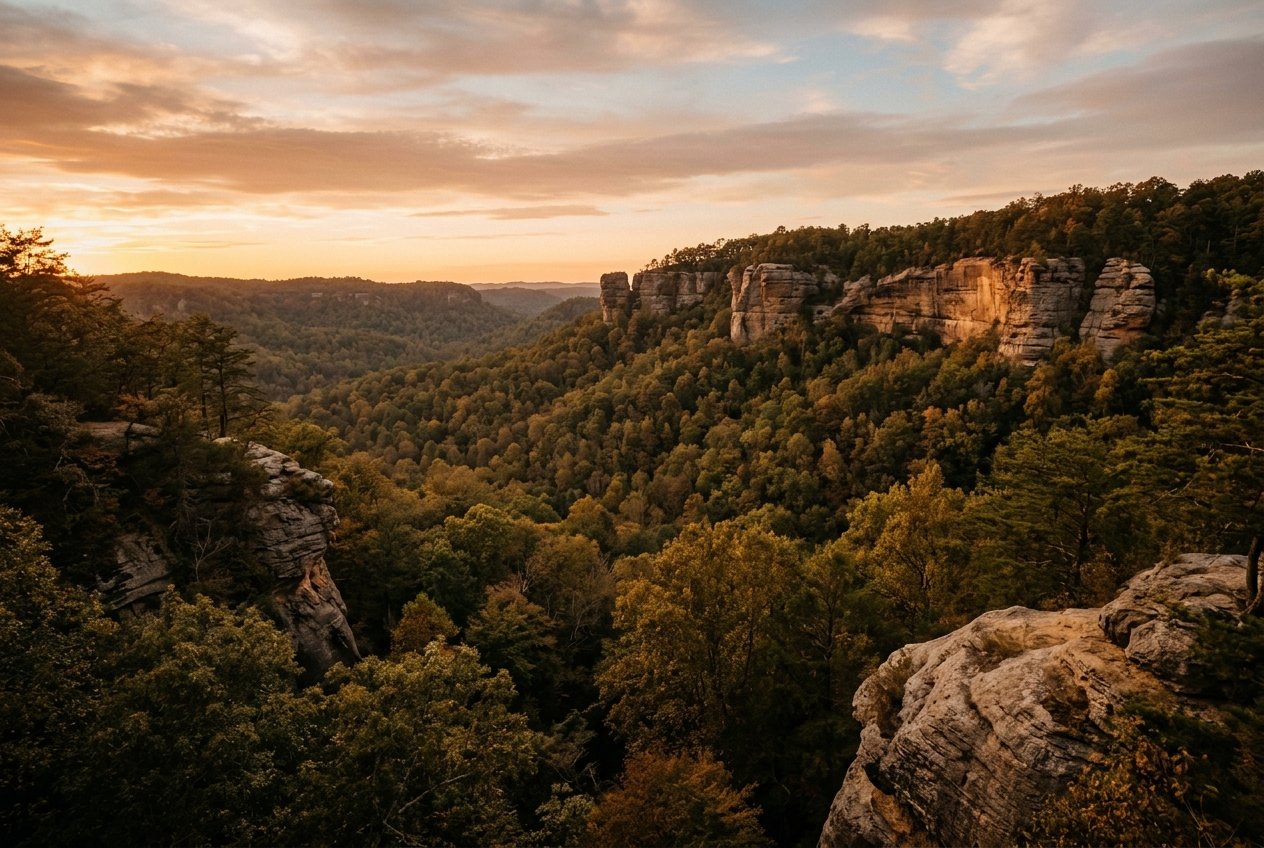
The Gorge effect on the county’s north side
Wolfe County’s northern reaches around Pine Ridge sit inside Red River Gorge country, and tourism demand concentrates there — cabins near the Gorge’s southern access points see the strongest visitor interest, and short-term rental activity has spread south from the Slade corridor accordingly. Position within that pattern matters more than county lines: two cabins twenty minutes apart can face entirely different booking realities. If rental income is part of your thesis, pressure-test it against the seasonality and operating realities in my cabin and STR investment guide before you let projected revenue justify a price.
How value actually gets set here
With comparable sales scarce, appraisal and pricing lean on judgment, and the variables that move value are not the city ones. Recorded access can swing a parcel’s worth dramatically. A drilled well or approved septic adds real, provable value to raw land. Road quality, flood-prone creek bottoms, timber maturity, and Gorge proximity all price in. This cuts both ways: mispriced listings — high and low — are common, and a buyer with a clear-eyed read can do well while an emotional one overpays. I will give you dated comparable data and my honest read rather than a number from memory; the market report explains that discipline.
County-level diligence — the non-negotiables
Every Wolfe County purchase should clear the same gates. Verify legal access in the deed records, not the listing remarks. Run a septic site evaluation on any unimproved land through the health department. Test wells and springs; price cistern hauling honestly where neither exists. Have an attorney search title deep enough to catch mineral and timber reservations, which ride with many Eastern Kentucky parcels. Confirm the county PVA’s records match what is being sold — boundaries and acreage in old deeds can drift from reality, and a survey is often money well spent. Flood mapping matters in the creek bottoms. None of this is optional here.
Working the county with me — and my disclosures
I work Wolfe County from next-door Beattyville, alongside the rest of the Gorge corridor — Slade, Stanton and Clay City, and Lee County. Two things you should know when weighing my advice: I publish investinthegorge.com, a site about Gorge-area property, and I earn my living representing buyers and sellers in these counties. I state both plainly because trust in a thin market is worth more than any single commission — and because you deserve to know where counsel comes from.
Common Questions
Is Wolfe County a good place to buy investment property?
It depends entirely on position and price. Cabins well-placed for Gorge visitors have a real demand story; remote parcels deep in the county do not automatically share it. Thin comparable sales cut both ways — bargains and overpriced listings coexist. I will not promise returns on any property; I will pull current dated data and give you an honest read on a specific parcel. For projections, involve your own accountant.
Why do Wolfe County properties take longer to buy or sell?
Thin inventory, irregular listings, and diligence that takes real time: septic evaluations, well tests, surveys, and title work on old deeds all add weeks. Financing rural and unique properties can add more, since appraisers have few comparables to work with. Build a patient timeline into your plans and the process goes smoothly; rush it and the process pushes back.
Do I really need a survey to buy land there?
Strongly consider one. Older Eastern Kentucky deeds often describe boundaries by creeks, stones, and long-gone fence lines, and acreage stated in a deed can differ meaningfully from what is on the ground. A survey converts assumption into fact before you pay for the assumption. On larger or irregular parcels I treat it as near-mandatory diligence.
See the community itself in the Campton guide, or study the rental thesis in cabins and STR investment.
Marcos Gil, REALTOR® · Keller Williams Commonwealth · Based in Beattyville, serving Lexington to the Red River Gorge · Also owner of Central Property Services and publisher of Invest in the Gorge — any recommendation involving my other businesses is disclosed in writing.
Get a read on Wolfe County
Last updated: August 19, 2026