

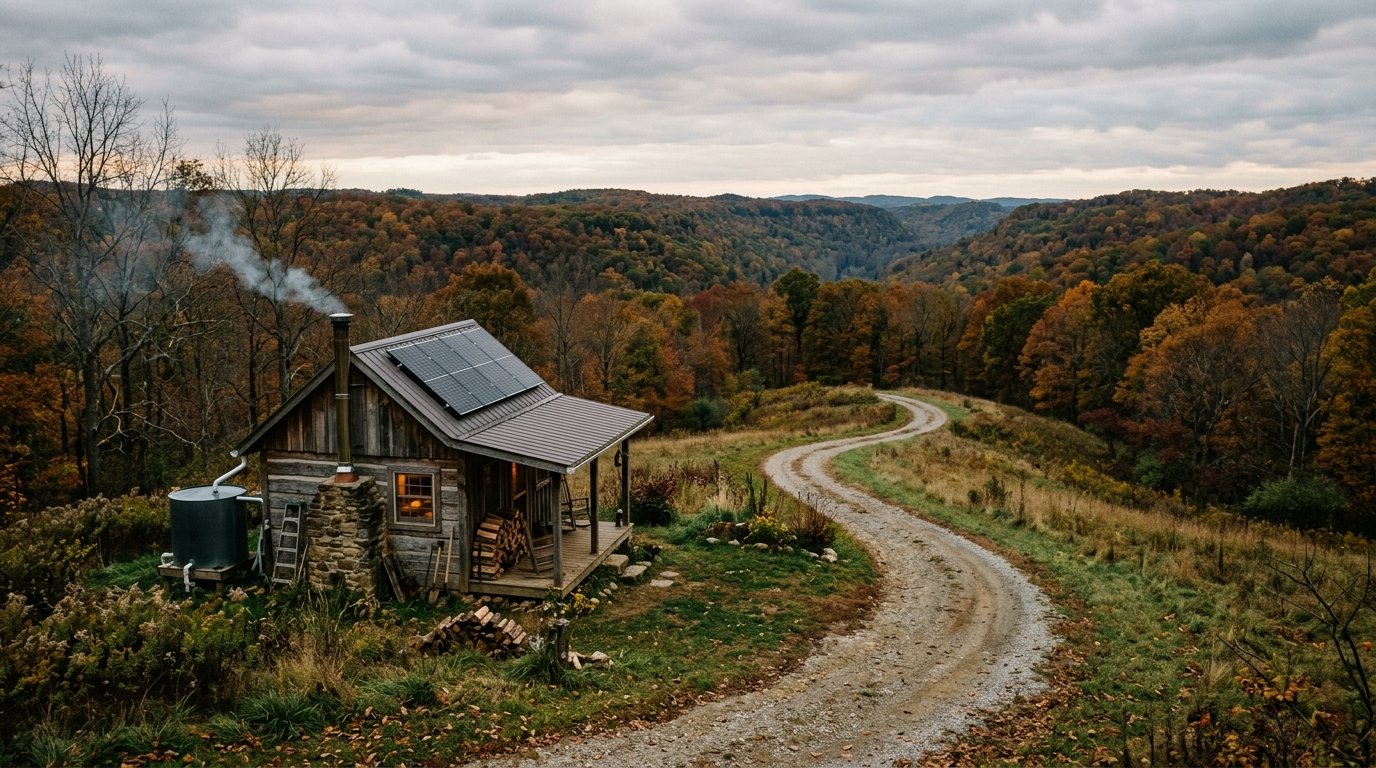
Off-Grid & Remote Properties in Eastern Kentucky
Autonomy is real out here. So is the maintenance schedule.
Off-grid Eastern Kentucky property trades convenience for autonomy: solar with battery storage, well or cistern water, septic, and roads you may maintain yourself. The savings on utilities are real but so are the costs — systems, upkeep, and harder paths to insurance and financing, since many lenders want conventional utilities. It suits people who genuinely want the work of self-sufficiency, not just the photographs of it.
What off-grid actually means on this terrain
Off-grid here is not a style — it is a set of systems you own and operate. Power means solar sized for real winter production in hollow shade, battery storage, and usually a generator for the gray weeks. Water means a drilled well, a spring you must test and protect, or a cistern filled by rain or hauling. Waste means septic where soils allow, or engineered alternatives where they do not. Heat is often wood you cut yourself. Each system is solvable; together they form a part-time job. Buyers who understand that going in tend to thrive. Buyers who wanted a picturesque power bill do not.
Autonomy is real out here. So is the maintenance schedule.
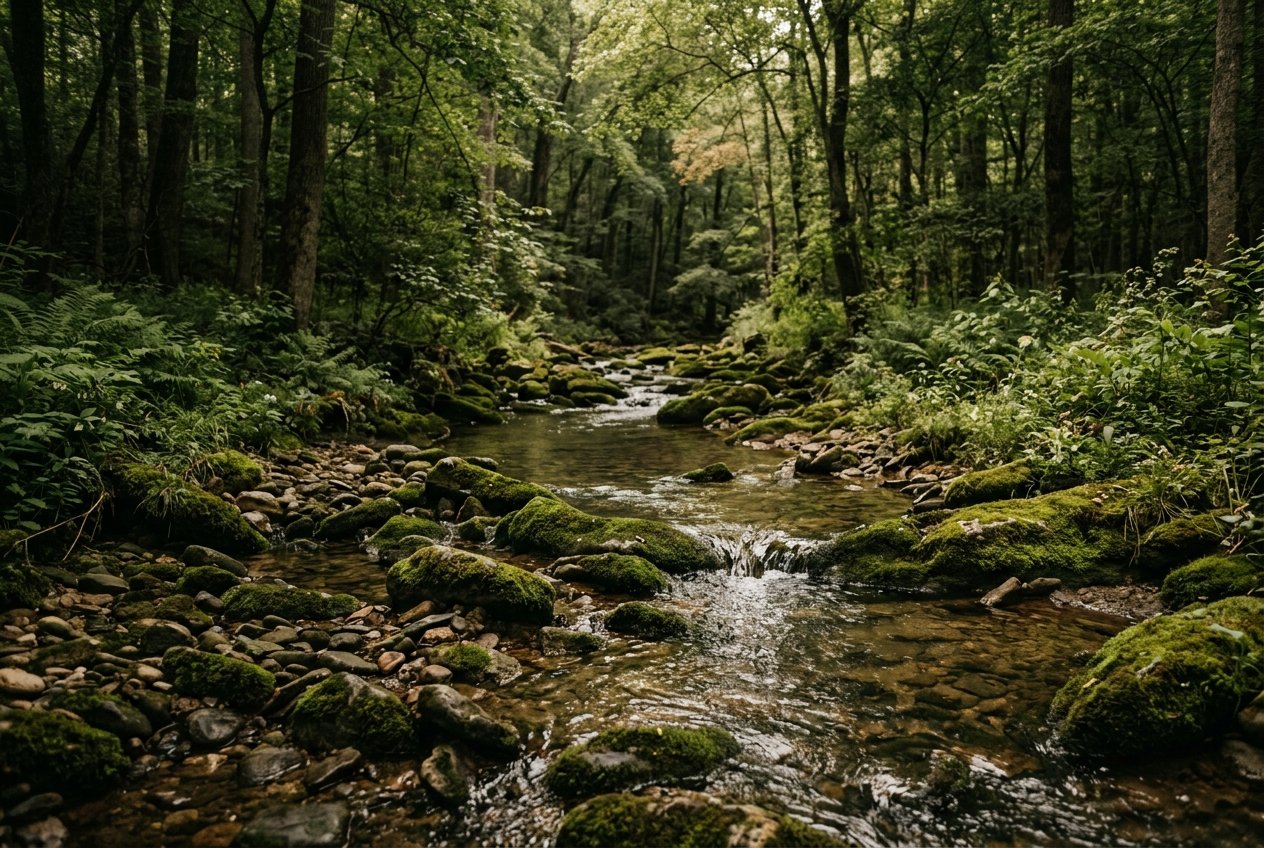
Access — the make-or-break diligence item
Remote parcels are remote because of the roads, and the roads are where deals should slow down. Confirm recorded, deeded access — not a neighbor’s goodwill. Ask who maintains the last mile, what it looks like after a wet January, and whether a propane truck, a septic pumper, or an ambulance can reach the site at all. County-maintained pavement giving way to a private creek-crossing track is common in Lee, Wolfe, and the surrounding counties, and it changes everything from insurance to resale. I walk these roads myself before I let a client fall in love with what is at the end of them — my base in Beattyville makes that practical.
Insurance and financing — the honest complications
Two industries dislike off-grid property: insurers and lenders. Carriers weigh distance from fire service, wood heat, and access when quoting — expect fewer willing companies and higher premiums, and start shopping coverage before you contract. Financing is the sharper constraint: many conventional loan programs expect standard utilities and year-round access, so genuinely off-grid places often mean specialized lenders, land-plus-construction structures, larger down payments, or cash. This is education, not lending advice — a licensed Kentucky lender who has actually closed rural and off-grid deals will tell you what is possible right now. The financing library covers the broader landscape.
Who this life actually suits — and the honest trade-offs
The life rewards a particular temperament: comfort with tools and troubleshooting, tolerance for isolation when weather closes the road, and satisfaction in systems you maintain yourself. The trade-offs deserve equal billing — a trip for groceries is an expedition, broadband may be satellite or nothing, emergency services are far, and every convenience you gave up stays given up in February. Resale is the quiet one: your buyer pool is small, and exits take patience. None of this is discouragement. It is the briefing I would want before making a decision this large, and plenty of people hear it and want the life more.
Buying one well
Structure the purchase around proof, not promises. Test the water source, whatever it is. Get the solar and battery system inspected by someone who installs them, not a general inspector. Verify the septic permit matches what exists on the ground. Title work matters doubly out here — old mineral reservations, timber rights, and informal easements ride along with many Eastern Kentucky deeds, so let the attorney dig. If the property might ever earn income as a getaway rental, temper expectations with the realities in my cabin and STR guide. And I publish investinthegorge.com, a Gorge-area property site — stated so you can weigh my perspective.
Common Questions
Can you get a mortgage on an off-grid property in Kentucky?
Sometimes, but it is harder. Many mainstream programs expect conventional utilities, year-round access, and comparable sales that thin markets rarely provide. Options that sometimes work include specialized rural lenders, construction-style loans, or larger down payments — and some buyers simply use cash, then refinance later. Talk to a licensed lender experienced with rural Kentucky before you write an offer; program rules change and I do not give lending advice.
Is solar enough to power a home in Eastern Kentucky?
A properly sized system with battery storage runs a home here, but design matters: hollow shade, short winter days, and stretches of gray weather mean honest systems include generous battery capacity and usually a backup generator. Have any existing system evaluated by a solar professional — panel age, battery health, and inverter quality vary enormously — before you assign it value in your offer.
What should worry me most about a remote property?
Access and water, in that order. A parcel without recorded legal access or with a road that fails in wet weather is a problem no renovation fixes, and a marginal water source constrains everything downstream. Systems can be upgraded; location and legal position cannot. Spend your diligence money there first.
Compare the connected-but-quiet alternative in the Campton and Wolfe County guide, or study the buy side of raw acreage in land and farms.
Marcos Gil, REALTOR® · Keller Williams Commonwealth · Based in Beattyville, serving Lexington to the Red River Gorge · Also owner of Central Property Services and publisher of Invest in the Gorge — any recommendation involving my other businesses is disclosed in writing.
Ask me about a remote parcel
Last updated: August 19, 2026