
Buying on a Private Road in Kentucky
The county doesn’t plow here. Who does is the whole question.
On a private road, the residents — not the county — own the maintenance problem: grading, gravel, potholes, snow, and the culvert that washes out. Before buying, confirm whether a recorded road maintenance agreement exists and what it obligates, because many lenders ask the same question and informal arrangements have a way of failing exactly when the road does. Winter and heavy rain are when private roads tell the truth; look at the road accordingly.
What “private road” actually means
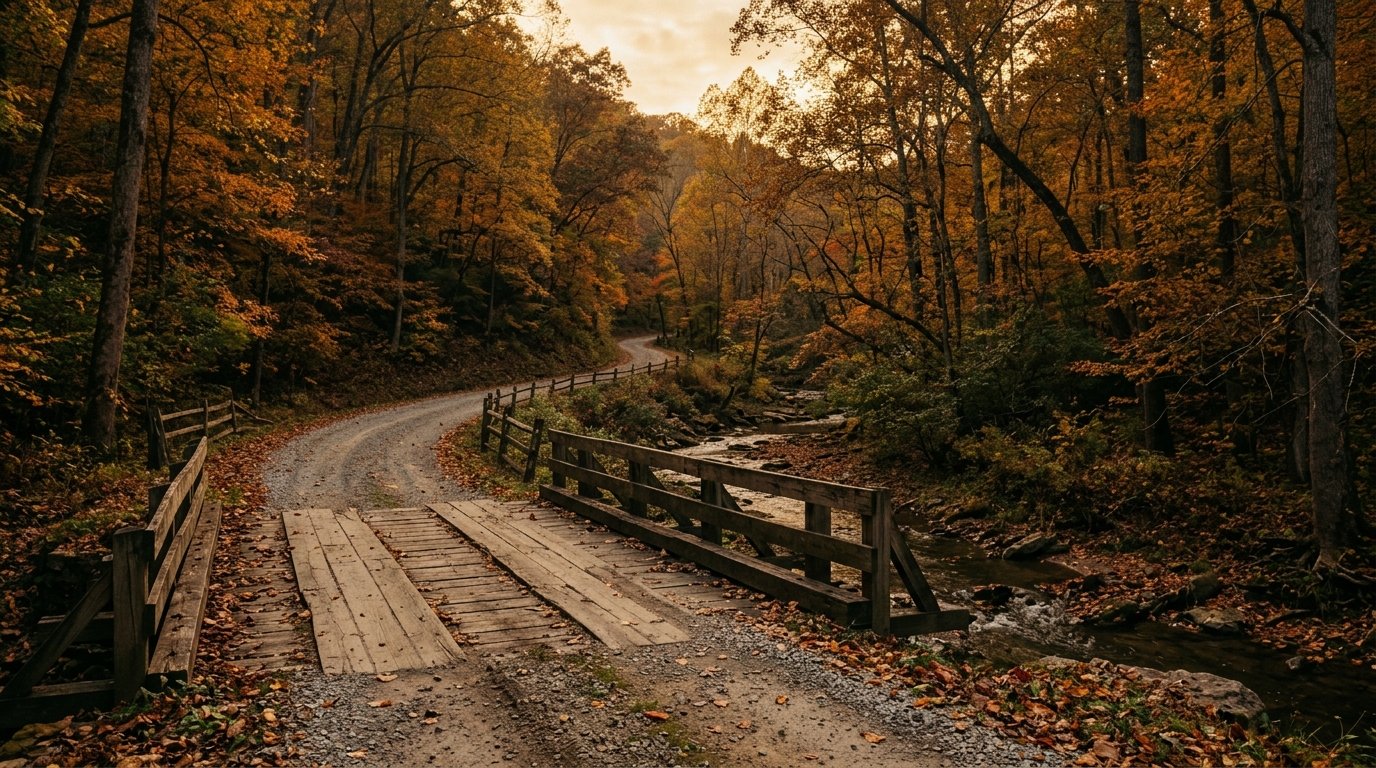
A private road is one no government maintains — common across rural Central Kentucky and the Gorge country, from farm lanes serving two houses to gravel roads threading a dozen parcels up a hollow. The land under the road may belong to one owner with easements for the rest, or to all abutters in shares; the legal shape varies parcel to parcel, which is why the deed and title work matter here. The practical constant: every load of gravel, every culvert, and every fallen tree is the residents’ to handle, by whatever arrangement exists — or doesn’t.
The county doesn’t plow here. Who does is the whole question.
Maintenance agreements: the document that keeps the peace
A recorded road maintenance agreement names who pays, how costs divide, and how decisions get made — and its absence is the most common private-road problem. Informal splits among friendly neighbors work until a washout meets an owner who won’t pay, and there is no county to call. During diligence, ask directly: is there a recorded agreement, what does it say, and is there any fund or history of actual contributions? Where none exists, your attorney can advise on establishing one — sometimes achievable at purchase, when everyone’s attention is focused. This pairs with the access questions in my surveys and easements guide.
The financing angle, plainly
Education, not a loan quote: many lenders ask about legal access and road maintenance when the property sits on a private road, and some loan programs look for a recorded maintenance agreement or evidence the road meets certain standards. An unrecorded handshake can therefore complicate not just your purchase but your future buyer’s — which is a resale consideration even for cash buyers. A licensed lender can tell you how a specific program treats a specific road; ask early, and see my financing overview for the broader landscape. Roads are one of those items where paperwork quietly is the value.
Winter, weather, and the road’s true condition
No plow is coming. Kentucky winters are inconsistent — some mild, some with ice storms that close hollows for days — and a steep gravel grade that’s charming in October is a different proposition glazed in January. Rain matters more often: watch how the road drains, whether culverts are sized and clear, and what the low-water crossing does after a storm. Walk or drive the road in bad weather if you can, and ask residents what the worst week of the year looks like. School buses, deliveries, and emergency response on that road are questions worth asking out loud, not assumptions.
Pricing the road into the deal
None of this argues against private roads — some of the most beautiful properties I show, from farms to Gorge-country cabins, sit at the end of one, and the privacy is exactly the point. It argues for pricing reality: a share of ongoing maintenance, the occasional collective repair, equipment if you’ll handle snow yourself, and the diligence cost of confirming access and agreements. Buyers who settle the paperwork and budget for gravel own their lane contentedly. Buyers who assume someone else will handle it become the neighbor everyone else’s agreement was written about.
Common Questions
Does a private road make a property harder to finance?
It can add questions rather than barriers: many lenders want confirmed legal access and often evidence of a maintenance arrangement, with requirements varying by loan program. A recorded road maintenance agreement typically smooths the path; its absence may require extra steps. Ask a licensed lender about the specific program and road early in the process — and remember your eventual resale buyer will face the same questions.
What if there’s no road maintenance agreement?
It’s common, and it’s fixable — sometimes. Your attorney can advise on drafting and recording an agreement among owners, which is easiest to accomplish at a sale, when parties are motivated. If neighbors won’t engage, you can still buy, but price in the risk: you may fund repairs others benefit from, with limited recourse. Never assume an informal arrangement survives an ownership change.
Who maintains a private road in winter?
Whoever the owners have arranged — which often means nobody, formally. Some roads share a hired blade or a resident with a tractor; others simply wait out ice. Ask what actually happened during recent storms, consider your own equipment and tolerance, and think about work, school, and medical access during a bad stretch before committing to the far end of a long grade.
Round out rural diligence with the septic and well guide and rural internet and utilities — the three questions every hollow property gets asked.
Marcos Gil, REALTOR® · Keller Williams Commonwealth · Based in Beattyville, serving Lexington to the Red River Gorge · Also owner of Central Property Services and publisher of Invest in the Gorge — any recommendation involving my other businesses is disclosed in writing.
Vet a private-road parcel
Last updated: August 19, 2026