

Palomar, Lexington KY — Neighborhood Guide
Palomar is southwest Lexington living built around one of the city’s most useful corners.
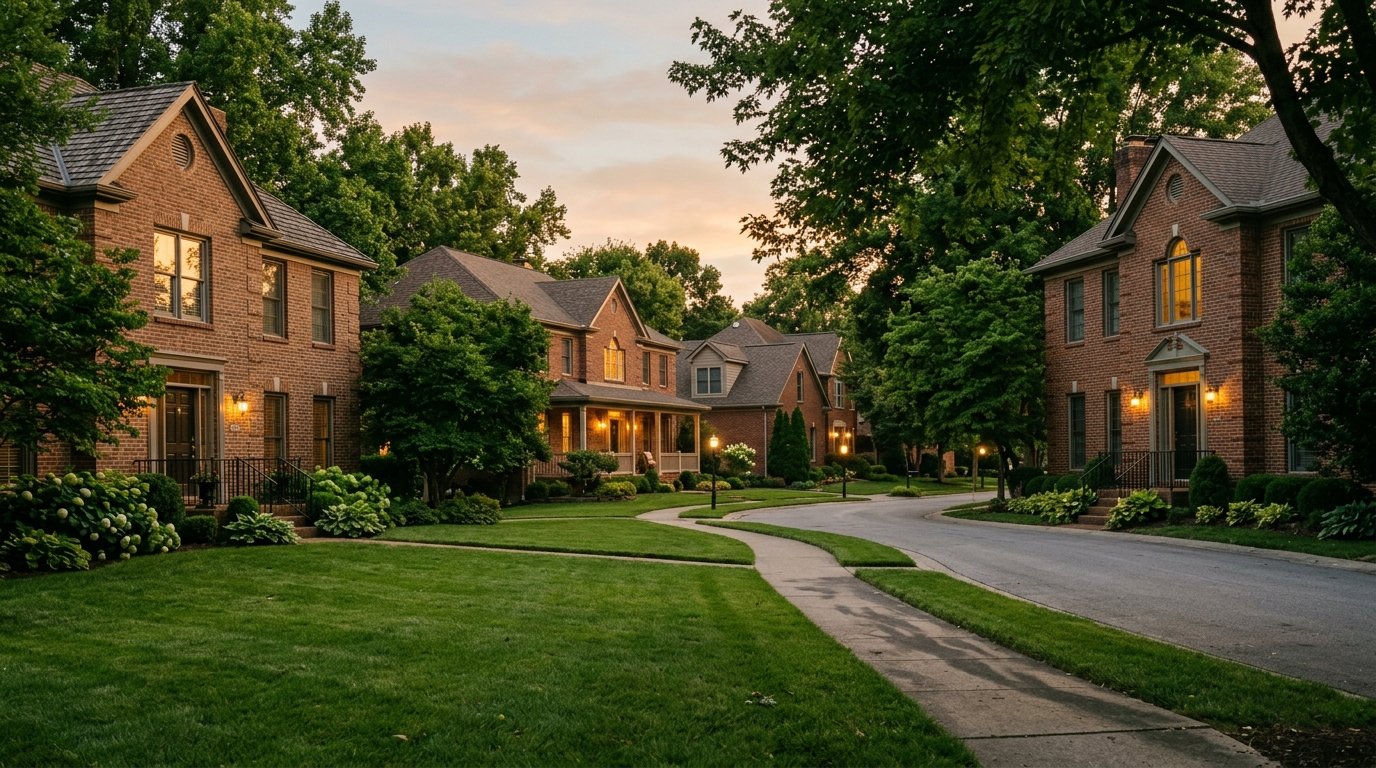
Palomar sits in southwest Lexington around Palomar Centre, the shopping and dining hub at Harrodsburg Road and Man o’ War Boulevard. Homes date mostly from the 1980s through the early 2000s — brick traditional and transitional designs on established, tree-lined streets. Residents trade a longer drive downtown for everyday errands within minutes, quick access to Blue Grass Airport and Keeneland, and a settled feel that newer fringe subdivisions have not yet grown into.
Property records and assessments for Fayette County addresses are maintained by the Fayette County Property Valuation Administrator.
What to Love About Palomar
Palomar earned its reputation the slow way — by being convenient for decades. The neighborhood grew up around the Harrodsburg Road corridor in the 1980s and 1990s, which means the trees have matured, the landscaping has filled in, and the houses were built when lots in this quadrant were still generous. It sits inside the Man o’ War loop, so most of southwest Lexington’s retail, medical offices and services are minutes away rather than a planned drive. For buyers comparing it to nearby Beaumont, Palomar generally reads as slightly older, slightly more established, and organized around its own commercial center.
Southwest Lexington living built around one of the city’s most useful corners.
Local Lifestyle
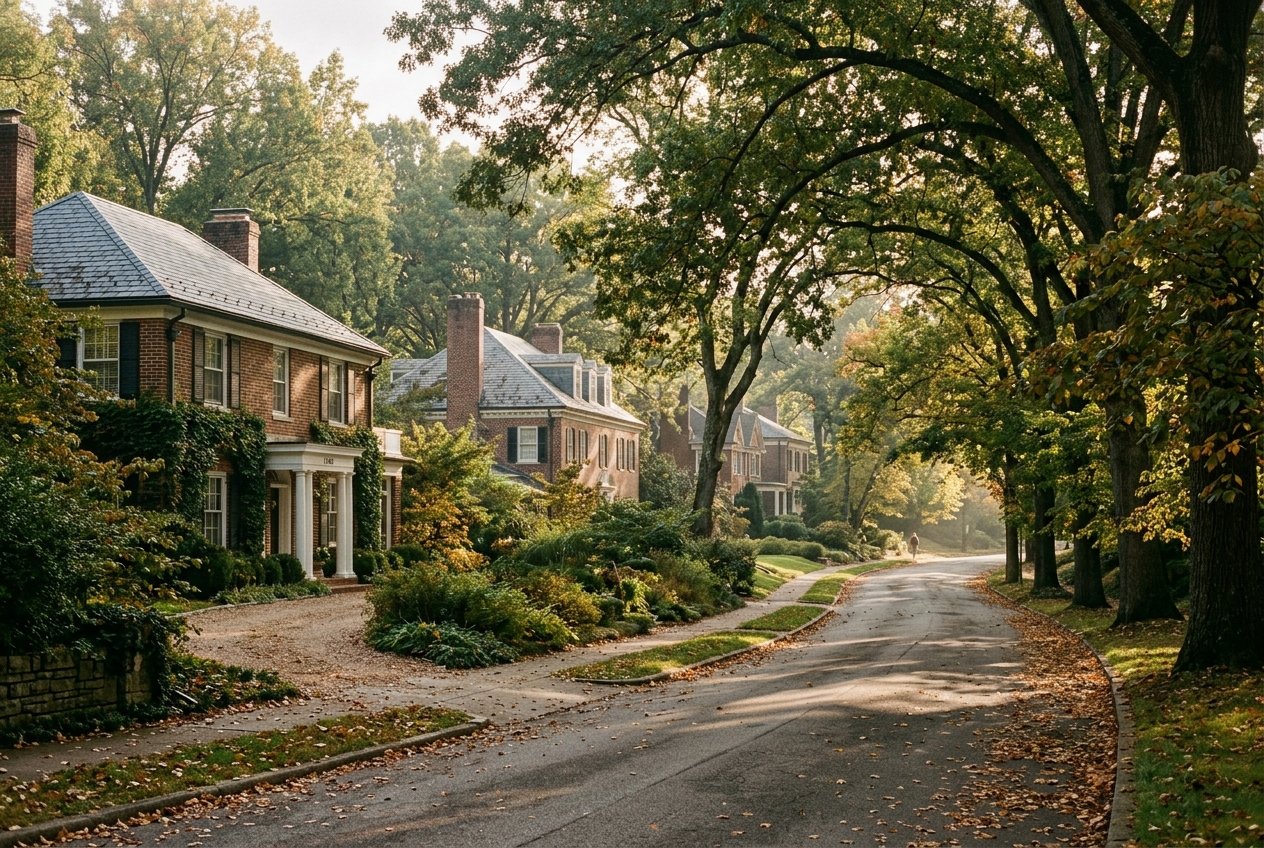
Life here orbits Palomar Centre and the shopping that has accumulated along Harrodsburg Road. That gives the neighborhood a self-contained rhythm: the grocery run, the pharmacy, the dinner out and the Saturday coffee all happen without crossing town. Sidewalks and connector paths link many streets, and the surrounding southwest quadrant holds parks and green corridors within a short drive. The trade-off is character — this is comfortable suburban Lexington, not a historic district, and buyers who want front-porch walkability to independent shops usually look closer to downtown.
Dining & Everyday Needs
Palomar Centre itself anchors the everyday: restaurants, a grocery, fitness and service businesses in one intersection-adjacent cluster. The broader Harrodsburg Road corridor adds more dining and retail heading toward New Circle Road, and the Beaumont Centre area a few minutes south widens the options further. Practically, most households here find they can run a full week of errands inside a five-minute radius — one of the strongest everyday-convenience profiles in Lexington outside Hamburg.
Getting Around
Position is Palomar’s quiet advantage. Man o’ War Boulevard connects east to Nicholasville Road and beyond; Harrodsburg Road runs straight toward New Circle Road and downtown; and Keeneland with Blue Grass Airport sits an easy drive west via Man o’ War and Versailles Road. Commuters heading to Jessamine County or the hospital corridors on Nicholasville Road are well placed. Peak-hour traffic on Harrodsburg Road is the honest caveat — it is one of the city’s busier arterials, and timing matters.
The Housing Picture
Expect predominantly brick single-family homes from the 1980s through early 2000s, in a range of sizes from modest ranches to larger two-story traditionals, plus townhome and patio-home pockets. Many homes are reaching the age where roofs, HVAC and windows have been replaced once — condition varies house to house, so inspection findings matter more than year built. For current pricing and how Palomar is trading right now, ask me for dated numbers or start with my market report — I don’t quote stale figures on a page.
Common Questions
Where exactly is Palomar in Lexington?
Palomar occupies the southwest quadrant around the intersection of Harrodsburg Road and Man o’ War Boulevard, taking its name from the Palomar Centre shopping development there. It sits between the Harrodsburg Road corridor and neighboring communities like Beaumont, inside the arc of Man o’ War, several miles southwest of downtown Lexington.
How does Palomar compare to Beaumont?
They share the same corridor and conveniences, but Palomar skews a bit earlier in construction era — largely 1980s and 1990s — while Beaumont’s core build-out ran later with a master-planned layout and its own Beaumont Centre. Palomar often appeals to buyers who want mature trees and established streets; Beaumont to those wanting newer systems and planned-community uniformity. I’m glad to walk both in one afternoon.
What should buyers check on Palomar-era homes?
Homes of this vintage commonly face first- or second-round replacements: roofs, water heaters, HVAC and original windows. Ask for a seller’s disclosure, verify the age of major systems, and budget by inspection findings rather than assumptions. None of this is unique to Palomar — it is standard diligence for any 1980s–1990s Lexington neighborhood.
Compare the southwest corridor with my guides to Beaumont and the wider Lexington market, or tell me your wish list through the Dream Home Finder.
Marcos Gil, REALTOR® · Keller Williams Commonwealth · Based in Beattyville, serving Lexington to the Red River Gorge · Also owner of Central Property Services and publisher of Invest in the Gorge — any recommendation involving my other businesses is disclosed in writing.
Tour Palomar with me
Last updated: August 19, 2026