
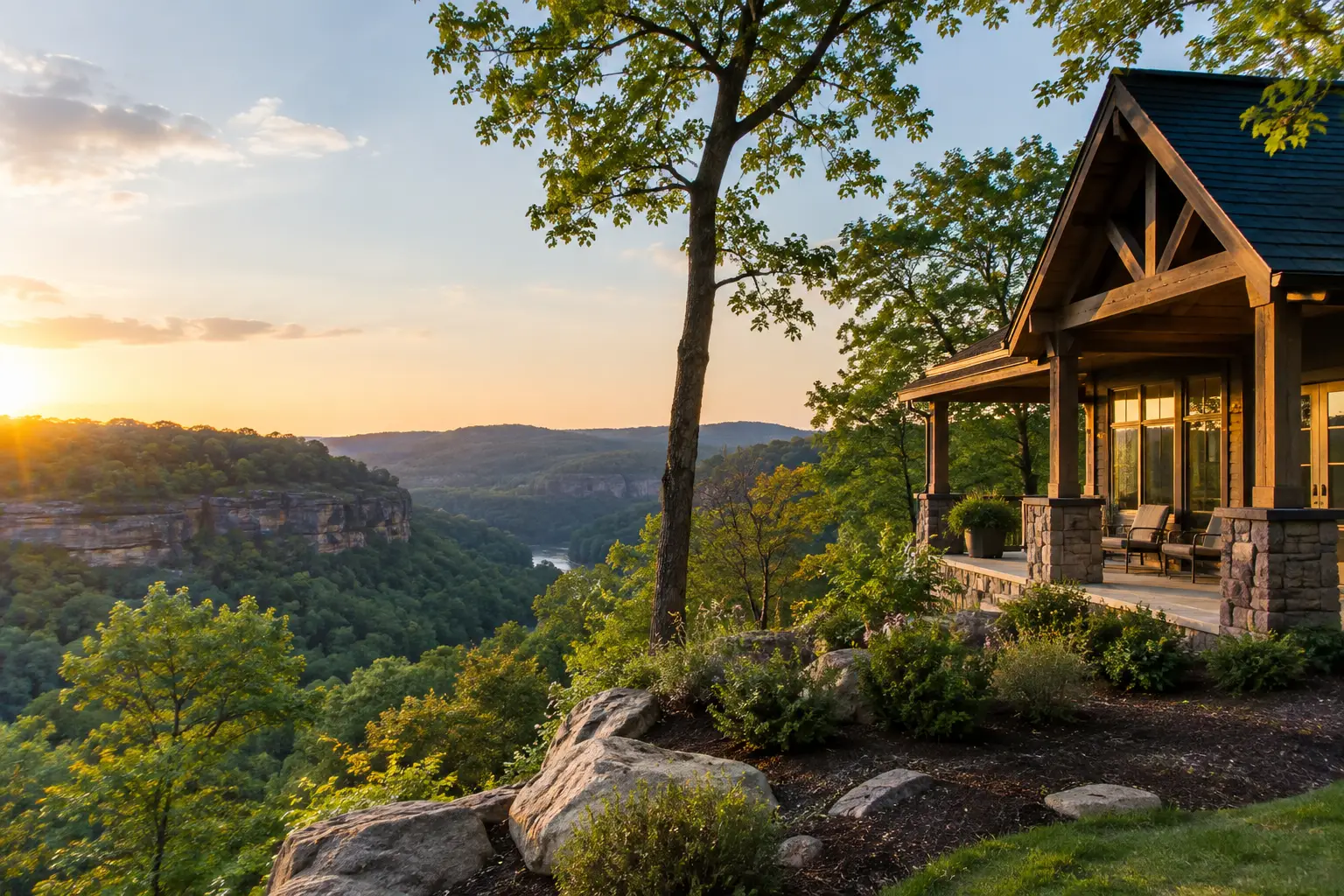
A cabin framed by sandstone cliffs can make almost any buyer picture a different life. That is the appeal of Red River Gorge real estate, and it is real. So are the operational questions that determine whether a property becomes a well-used retreat, a durable investment, or an expensive lesson in rural ownership.
The Gorge is not a single, uniform market. A property near Slade, a wooded tract outside Campton, a cabin toward Rogers, and acreage reached through Wolfe, Powell, Lee, or Menifee County may share the same broad destination identity while carrying very different access, utility, financing, rental, and resale considerations. The listing photos are the easy part. The property work begins underneath them.
Red River Gorge Real Estate Is a Location Study
Buyers often begin with proximity to trailheads, climbing areas, restaurants, or the Natural Bridge area. Those are valid lifestyle filters, but they are not enough to establish value. In this market, the route to the property can matter nearly as much as the property itself.
Ask how the last mile performs in heavy rain, winter weather, and after a busy weekend. Is the road state maintained, county maintained, privately maintained, or simply used by several neighbors? If private, who has the legal right to use it, and who pays when a culvert fails or gravel is needed? A steep gravel drive may suit an owner who visits occasionally in a four-wheel-drive vehicle. It can be a real limitation for guests, cleaners, lenders, appraisers, emergency access, and future buyers.
The same discipline applies to the view. A ridge-line vista may command a premium, but the buyer should understand what protects it. Is the surrounding land in public ownership, held in a conservation arrangement, or privately owned and capable of being developed or timbered? “Forever view” is marketing language unless the title, adjoining ownership, and applicable restrictions support it.
For a primary or second home, this is a lifestyle decision with an operational overlay. For an investor, it is both a lifestyle product and a small hospitality business. Those are not interchangeable underwriting models.
Cabins Need a Different Valuation Method
Cabin values in the Gorge are frequently distorted by broad averages. A median sale price from a countywide report can be useful context, but it does not tell you whether a particular cabin competes with newer rental inventory, has year-round access, carries a credible occupancy history, or is functionally obsolete.
A sound valuation begins with comparable properties that buyers would actually consider as substitutes. That means looking beyond bedroom count and square footage. Construction era, finish level, hot tub and outdoor living areas, views, parking, road quality, distance to demand drivers, and rental readiness all affect buyer behavior.
The income side needs equal scrutiny. Gross revenue screenshots and optimistic booking projections are not a valuation. They are prompts for questions. What was the property’s actual revenue by year? Was it professionally managed? What percentage went to management, cleaning coordination, platform fees, repairs, supplies, insurance, utilities, and replacement reserves? Was performance driven by the cabin itself, an unusually strong market period, or a seller with a following and established operations?
A beautiful cabin can still be a weak investment if it requires constant intervention, has limited guest access, or enters the market at a time when comparable stays are multiplying. Conversely, a modestly sized but well-designed property with reliable access, a clear guest experience, and disciplined expenses may perform better than its finishes suggest.
Sewer First, Always
In rural Kentucky, septic and water deserve early attention, not a rushed inspection-period conversation. Sewer first, always. If a property is not served by public sewer, confirm the septic system’s age, permit history, capacity, location, and condition. Do not assume that a three-bedroom septic approval supports a cabin marketed for eight or 10 overnight guests.
This is especially important for short-term rentals. Guest turnover, laundry volume, occupancy patterns, and maintenance practices can place more demand on a system than ordinary owner use. An aging or poorly documented system may affect financing, insurance, expansion plans, and the practical number of guests the property can responsibly accommodate.
Water warrants the same attention. Is service provided by a water district, a shared line, a spring, or a well? If a well or spring is involved, what is the yield and water quality? Are there easements for lines crossing neighboring land? In periods of freezing weather or drought, a romantic rural water source becomes a very practical issue.
Other fundamentals should be sourced, dated, and interpreted before the buyer is committed:
- Recorded access, easements, boundaries, and any survey gaps
- Flood exposure, drainage paths, slope stability, and insurance implications
- Electric service capacity, internet options, cell coverage, and backup-power needs
- Deed restrictions, local rules, and the property’s history of permitted use
None of these items automatically kills a deal. They establish the cost, risk, and operating assumptions that should shape the price and contract terms.
Financing Can Change the Search
Many Gorge buyers arrive with a conventional loan preapproval and assume the process will resemble buying a neighborhood home in Lexington or Richmond. Sometimes it does. Sometimes the property type changes the lender conversation quickly.
A remote cabin, unconventional construction, acreage-heavy tract, mixed-use property, or home with limited comparable sales may receive a more cautious appraisal review. A lender may also evaluate whether a property is suitable as a primary residence, second home, or investment purchase under its particular guidelines. Income from a planned short-term rental should not be treated as available qualifying income unless the lender confirms exactly how it will be handled.
Cash buyers have more flexibility, but not immunity from risk. They still need a title review, a survey strategy where boundaries are uncertain, inspections tailored to rural systems, and a clear budget for deferred maintenance. Septic replacement, road work, retaining walls, roofs, decks, HVAC systems, and water management can change the economics of a “cash deal” quickly.
For land buyers, the sequence matters even more. Before becoming attached to a ridge or creek bottom, establish what can legally and physically be built there. Topography, soil conditions, road frontage, access rights, utilities, setbacks, and water all influence usable acreage. Fifty acres of steep woodland can be extraordinary recreational land and still offer only a narrow practical building envelope.
Sellers: Sell the Facts, Not Just the Feeling
The Gorge market rewards good storytelling, but buyers and their advisors will eventually test the story against documents and condition. Sellers who prepare early tend to control the narrative better than sellers who wait for a buyer’s inspection to reveal the property’s weak points.
A strong pre-listing file might include prior surveys, septic records, water information, utility history, road-maintenance arrangements, rental statements, improvement invoices, and a candid outline of known repairs. This is not about over-disclosing beyond legal requirements. It is about reducing uncertainty where uncertainty would otherwise be priced into an offer.
For rental cabins, clean financial presentation matters. Separate gross bookings from owner blocks, management fees, maintenance costs, and capital improvements. If revenue rose after a renovation, document what changed. If the property benefits from repeat guests or direct bookings, explain the operational system without implying that every buyer will reproduce it.
Pricing should account for the buyer pool. A highly customized off-grid retreat may deserve admiration and still take longer to sell than a cabin with straightforward access, familiar systems, and broad financing appeal. The best price is not the number that flatters the owner. It is the number supported by current competition, credible comparable sales, condition, and the property’s actual path to ownership.
The Purchase Decision Should Survive a Rainy Tuesday
A Gorge property should be evaluated in more than golden-hour light. Visit after rain if possible. Drive the approach as though you are arriving at night. Check the turn radius, parking, drainage, exterior stairs, deck condition, and the practical route from vehicle to front door with groceries or luggage. Ask what happens when the power goes out, the internet drops, or a guest calls about a locked smart lock on a holiday weekend.
That level of scrutiny does not diminish the romance of Red River Gorge ownership. It protects it. The right property can offer both the limestone, forest, and quiet that draw people here and the systems that make ownership feel deliberate rather than fragile.
The useful question is not simply whether a cabin is beautiful or whether a tract feels private. It is whether the property, the intended use, and the buyer’s tolerance for hands-on ownership fit each other. When those answers align, the Gorge is not just a place to visit. It can be a property decision that holds up long after the view has become familiar.
Related guides: Luxury Cabins at the Red River Gorge · From Lexington to the Gorge: The Second-Home Path
Leave a Reply